

Why choose forging for automotive parts
2024-01-16
After decades of development, the auto parts industry has evolved from simple parts manufacturing to a comprehensive industry integrating R&D, production, sales and service. The development of auto parts industry has created great value for the society. In the future, China's automobile industry will develop in the direction of more intelligent, environmentally friendly, energy-saving, efficient and safe, which puts forward higher requirements for the auto parts industry.
With the continuous development of China's automobile industry, China's auto parts market has also developed rapidly, and the auto parts industry has become an important industry with the most vitality and potential in China's economic development. Nowadays, the domestic automobile industry has entered a comprehensive transformation and upgrading, the rapid rise of new energy vehicles in a critical period, new energy vehicles on parts product quality, performance and life put forward higher requirements, and these products on the traditional forging process has put forward a serious challenge.
Forging process is an advanced metal molding method, is through the forging equipment will be heated to the plastic state of metal forging, through repeated stretching, compression, bending and other process deformation to achieve the desired shape and size. The automotive parts industry usually adopts forging process to produce and manufacture automotive parts, and its processing is characterized by high precision, good surface quality, high productivity and so on.
The following introduces the basic principle of forging process and the demand for its use in the auto parts industry.
Forging refers to the metal billet after heating forging and annealing processing methods.
1, forging process characteristics
(1) The forging process can be metal billets under the action of external forces, from liquid to solid, and obtain a certain mechanical properties of the solid state forming parts.
(2) The forging process can improve the organizational structure and mechanical properties of metal materials, such as density, hardness, strength, toughness and wear resistance.
(3) The forging process requires high production equipment, low productivity, high production costs, not for mass production.
(4) The parts manufactured by forging process have high dimensional accuracy and good surface quality. After forging the mechanical properties of metal materials are also better.
(5) auto parts industry on the application of forging process demand mainly includes: ① automobile wheel hub forgings; ② automobile wheel forgings; ③ engine parts forgings; ④ forging die; ⑤ engine crankshaft; ⑥ other types of forgings.
2, forging equipment
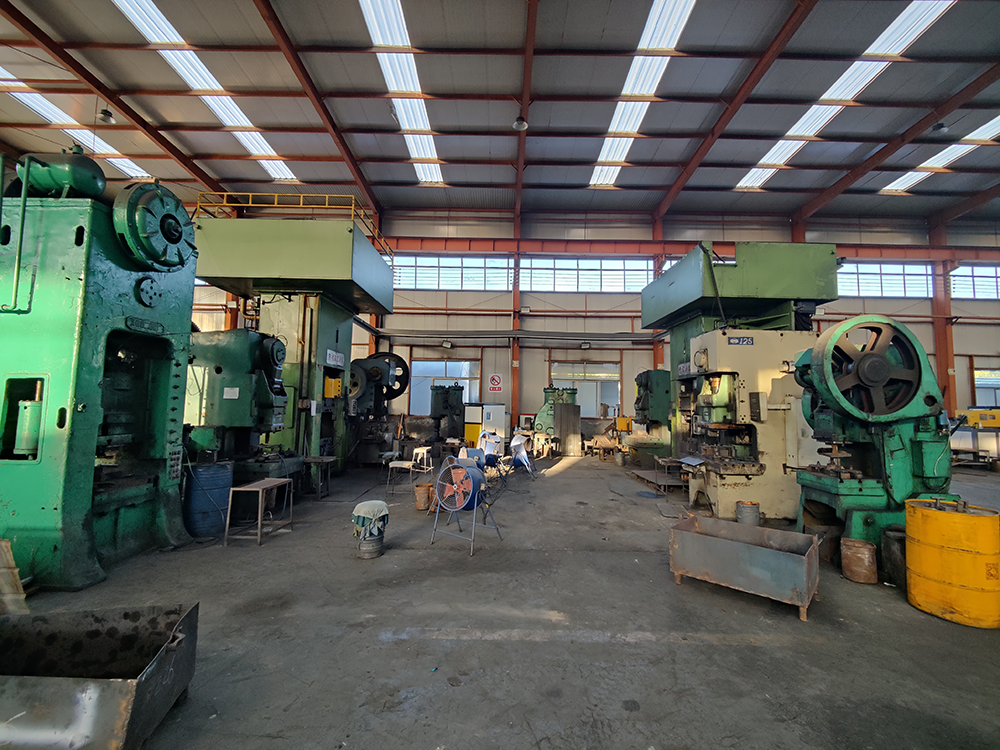
In the auto parts industry, forging equipment is one of the important production equipment, mainly including the following types:
1)Friction press for processing shaft parts, such as crankshafts, connecting rods, gears and so on.
2)Forging press: Forging press is mainly used to produce various shaft parts of automobile, such as rims, hubs and so on.
5) Forging die is the production of automotive parts of the basic tools, mainly: cold extrusion mold, cold drawing mold and ductile iron mold.
6) heating furnace: heating furnace is used to heat the billet, in order to facilitate the subsequent processing.
3, forging materials
Forging materials mainly include blanks, forging heating, forging temperature and forging speed, etc., which has a greater impact on the quality of the final forgings. In order to make forgings to achieve the required performance, the raw material requirements are higher, for different raw materials to make different choices, such as for some large parts to choose the better performance of raw materials, such as forging pressure steel, casting and forging steel, high alloy cast iron and so on.
With the rapid development of the automobile industry, China's auto parts industry has been transformed and upgraded from the past single mechanical processing to the direction of lightweight, intelligent, information technology. In the context of the rapid rise of new energy vehicles, the traditional auto parts industry is facing great challenges.
4, the demand for auto parts industry
Auto parts industry is the pillar industry of China's national economy, the current output value of auto parts industry has accounted for nearly 5% of the national industrial output value. With the rapid growth of automobile ownership, the auto parts industry has also been rapid development, the market demand is gradually expanding, the scope of product sales is also expanding, which brings great business opportunities to the auto parts industry.
As an industry involving machining, electronic technology, material processing and other fields, the auto parts industry has a large technical content. With the increasing car ownership in China and the popularization of new energy vehicles, the development prospect of China's auto parts industry is very broad. Therefore, China's auto parts industry is in a period of rapid development. In the future, with the continuous improvement of the economic level, people put forward higher requirements for travel safety, comfort and environmental protection.
Latest News


Located at No.57, Weiqiao Aluminum Deep Processing Industrial Park, Binzhou City, Shandong Province, China
Copyright © 2023 Shandong Sennai Technology Co., Ltd SEO 国际站建设:中企动力 淄博 外贸Google推广
Welcome your advice message
